Stress In The Workplace
Early in the 20th century, Harvard physiologist Walter Bradford Cannon noted that when strongly aroused, the nervous system of an animal, combines with adrenaline, causing an acute stress response, or what he coined as the “flight or fight response”. Both real and imaginary threats can trigger this response.
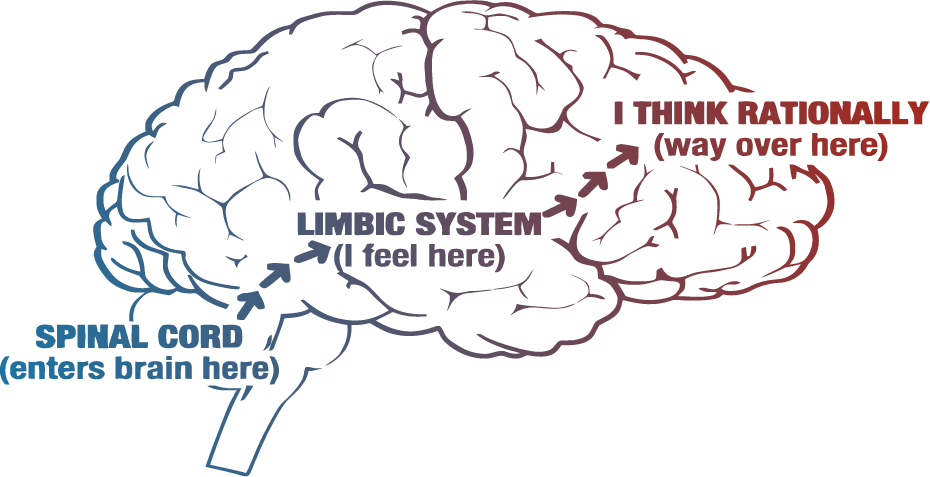
In the workplace, events enter our emotional brain first, labeling an event as a threat or reward. This label is then communicated to our thinking brain. We thus have an emotional reaction to events before our rational mind engages., It is our thinking brain, which helps us determine the best behavioral response to an event. When an event triggers a negative emotion, it diminishes our thinking brain’s cognitive resources, limiting the its ability to conceptualize a best response.
Some experts believe people with anxiety have a hypersensitive flight or fight response. That is, it activates without much provocation or with no provocation at all. Even a perceived threat can make us go into full blown fight or flight. Once this occurs, everything around us becomes a possible danger and we become overly anxious.